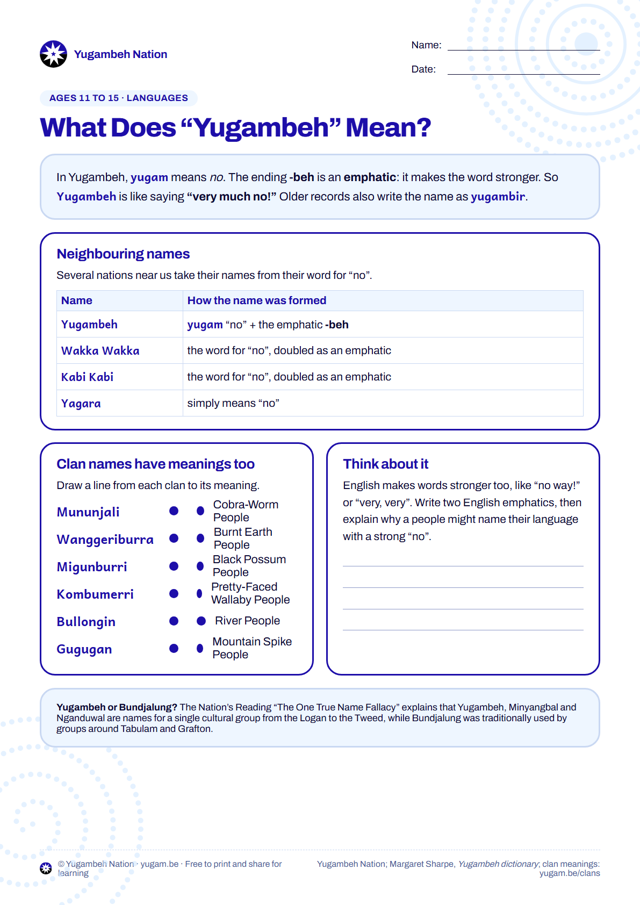
Discover that Yugambeh comes from yugam, “no”, with an emphatic ending, compare how neighbouring nations’ names were formed, and explore clan-name meanings.
Download nowPDF · 327 KBPrints on A4. Free to print and share for learning; please keep the Yugambeh Nation’s name on it.
What students do
- Learn that Yugambeh comes from yugam, “no”, with an emphatic ending
- Compare how neighbouring nations’ names were formed
Australian Curriculum
- Year levels
- Years 6 to 9
- Learning areas
- LanguagesEnglish
- A_TSIC1Diverse languages and cultural expressions, and the right to maintain and control themCulture
- A_TSIP1Two distinct First Nations Peoples, each made up of many nationsPeople
Suggested links to version 9.0 of the Australian Curriculum cross-curriculum priorities: First Nations histories and cultures. Summaries are in our own words; see ACARA for the full organising ideas.
More worksheets
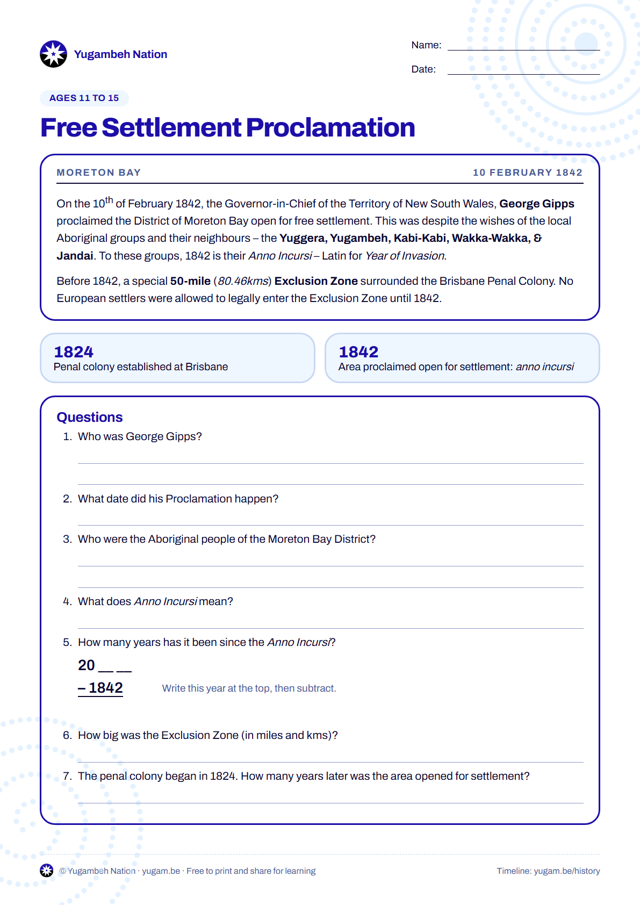
Free Settlement Proclamation Worksheet
Learn about the year 1842, the Proclamation of George Gipps, and what it meant for local Aboriginal people, in this simple worksheet.
View and download →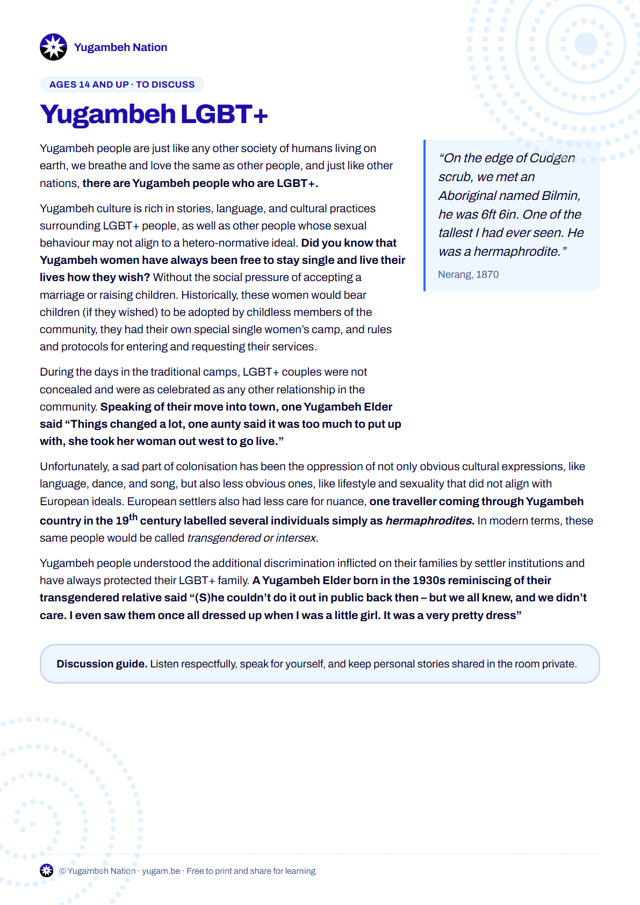
Yugambeh LGBT+ Discussion Sheet
A discussion activity introducing students to Yugambeh LGBT+ history and culture.
View and download →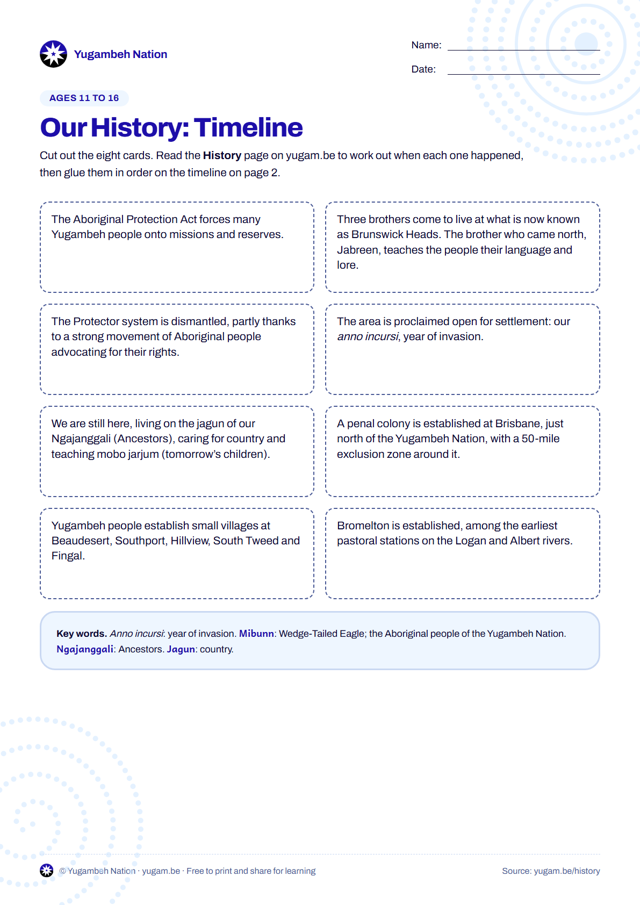
Our History: Timeline Activity
Cut out eight moments in Yugambeh history, from the Dreaming to today, put them in order on the timeline and answer the questions.
View and download →