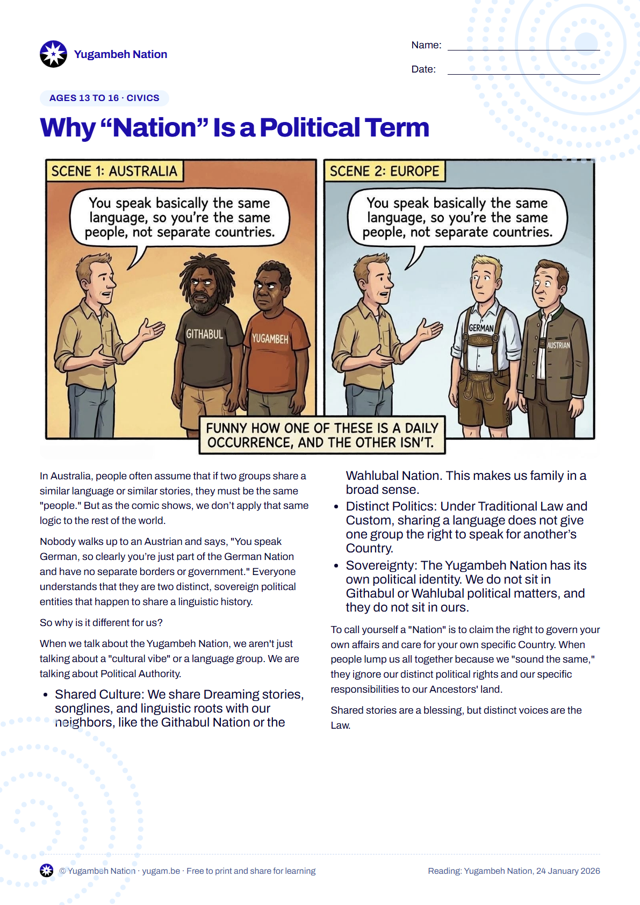
Use a comic about Germany and Austria to explore why sharing a language doesn’t make two peoples one nation, and what sovereignty means for the Yugambeh Nation.
Download nowPDF · 543 KBPrints on A4. Free to print and share for learning; please keep the Yugambeh Nation’s name on it.
What students do
- Analyse a comic about language and nationhood
- Explain political authority and sovereignty
Australian Curriculum
- Year levels
- Years 8 to 10
- Learning areas
- Civics and CitizenshipEnglish
- A_TSICP3Traditional owners, native title and pre-existing sovereigntyCountry/Place
- A_TSIP1Two distinct First Nations Peoples, each made up of many nationsPeople
- A_TSIP2Strong systems of family, kinship, law, governance and authorityPeople
Suggested links to version 9.0 of the Australian Curriculum cross-curriculum priorities: First Nations histories and cultures. Summaries are in our own words; see ACARA for the full organising ideas.
More worksheets
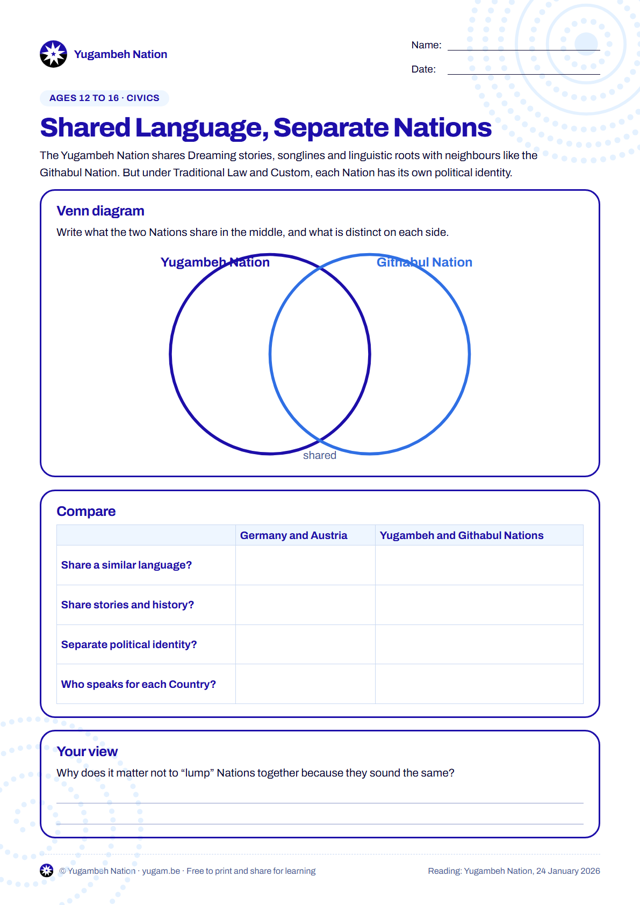
Shared Language, Separate Nations
Compare Germany and Austria with the Yugambeh and Githabul Nations using a Venn diagram, and explain the difference between shared culture and political authority.
View and download →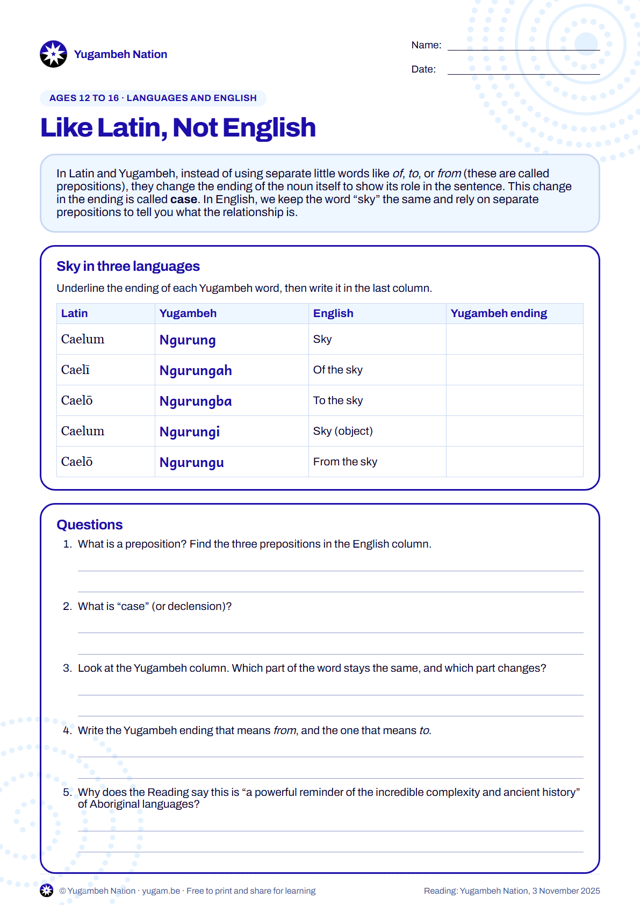
Like Latin, Not English: Case Endings
Discover how Yugambeh, like Latin, changes the ending of a word to show its role in a sentence, where English uses little words like of, to and from.
View and download →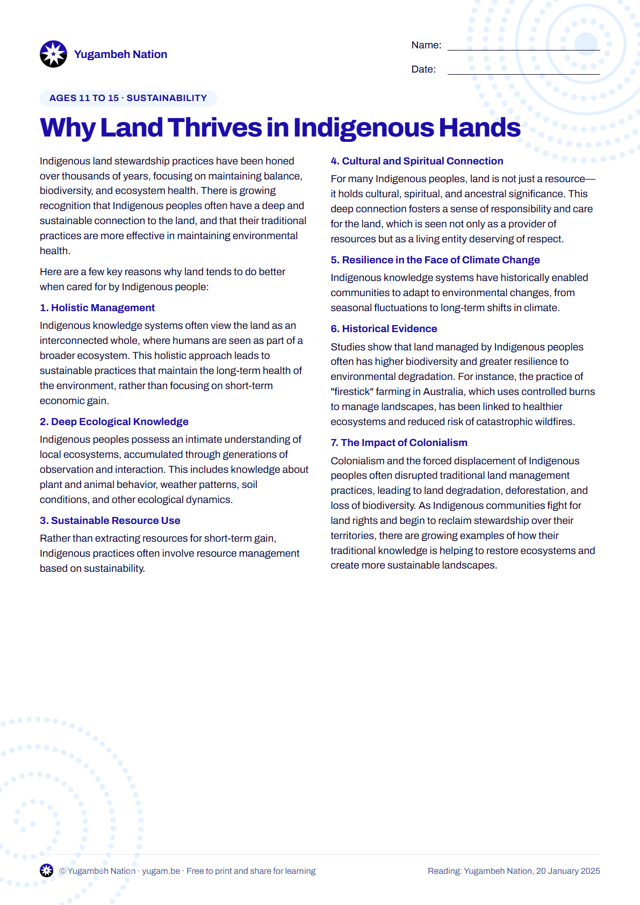
Why Land Thrives in Indigenous Hands
Read seven reasons land tends to do better when cared for by Indigenous people, from holistic management to firestick farming, and answer questions.
View and download →