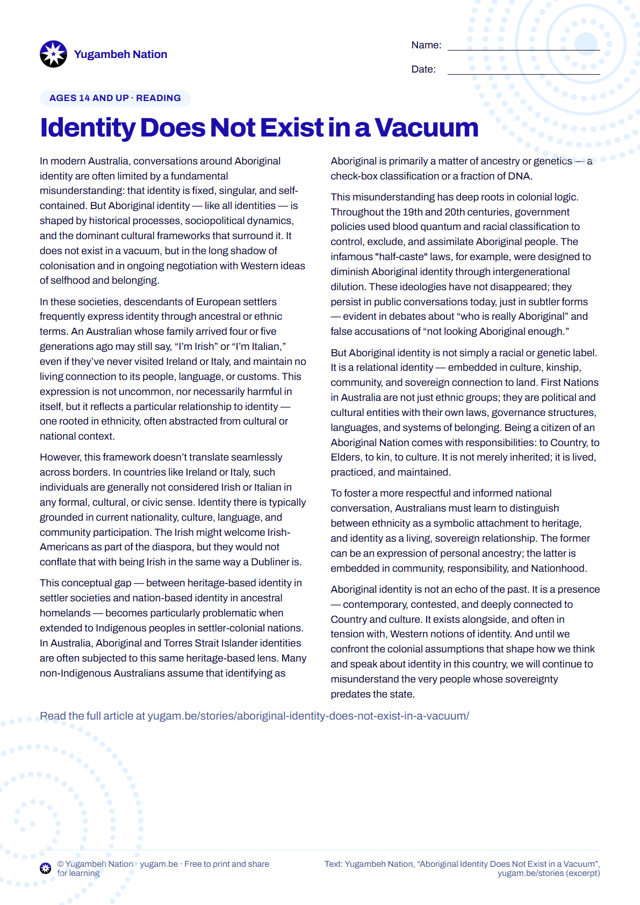
Read why Aboriginal identity is relational, sovereign and connected to Country, not a matter of ancestry alone, and answer questions on the argument.
Download nowPDF · 288 KBPrints on A4. Free to print and share for learning; please keep the Yugambeh Nation’s name on it.
What students do
- Read why Aboriginal identity is relational and sovereign
- Answer questions on the article’s argument
Australian Curriculum
- Year levels
- Years 9 and 10
- Learning areas
- Civics and CitizenshipHistoryEnglish
- A_TSIP2Strong systems of family, kinship, law, governance and authorityPeople
- A_TSIC3Resilience in keeping culture strong despite the impacts of colonisationCulture
- A_TSIP1Two distinct First Nations Peoples, each made up of many nationsPeople
Suggested links to version 9.0 of the Australian Curriculum cross-curriculum priorities: First Nations histories and cultures. Summaries are in our own words; see ACARA for the full organising ideas.
More worksheets
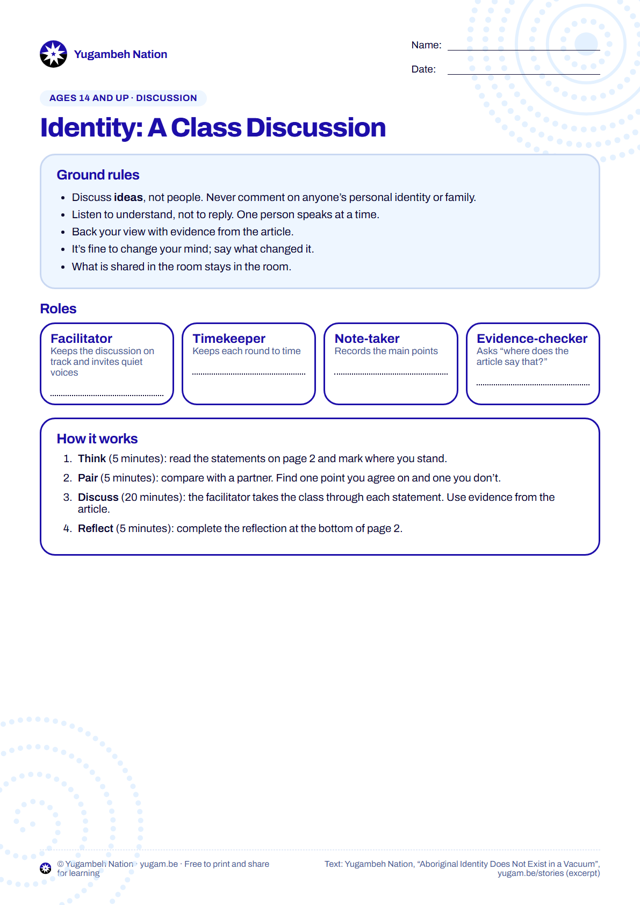
Identity: A Structured Class Discussion
A structured, respectful class discussion on the ideas in “Aboriginal Identity Does Not Exist in a Vacuum”, with ground rules, roles, statements to weigh up and a reflection.
View and download →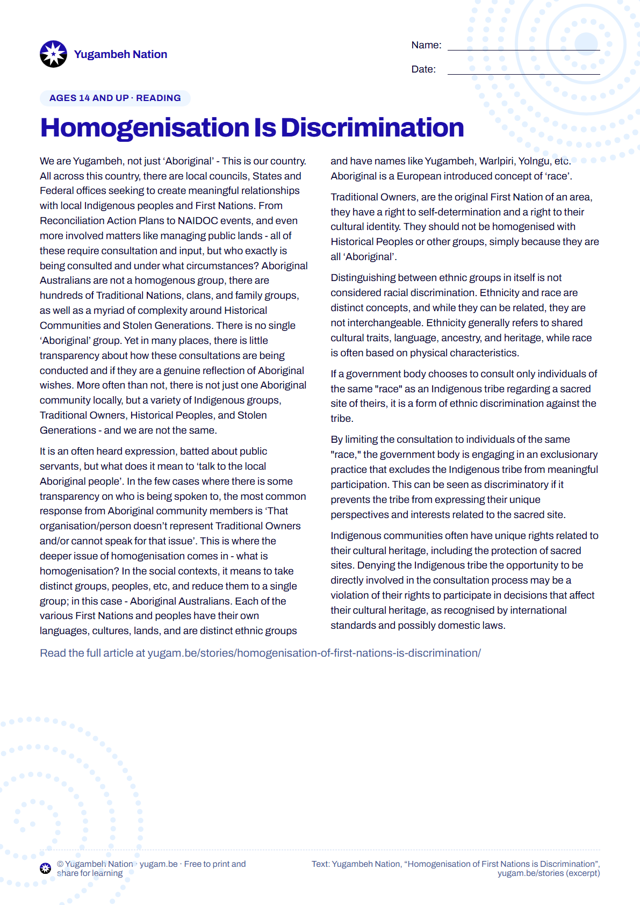
Homogenisation of First Nations Is Discrimination
Read why treating all Aboriginal people as one group in consultations can silence Traditional Owners, and what the difference is between race and ethnicity.
View and download →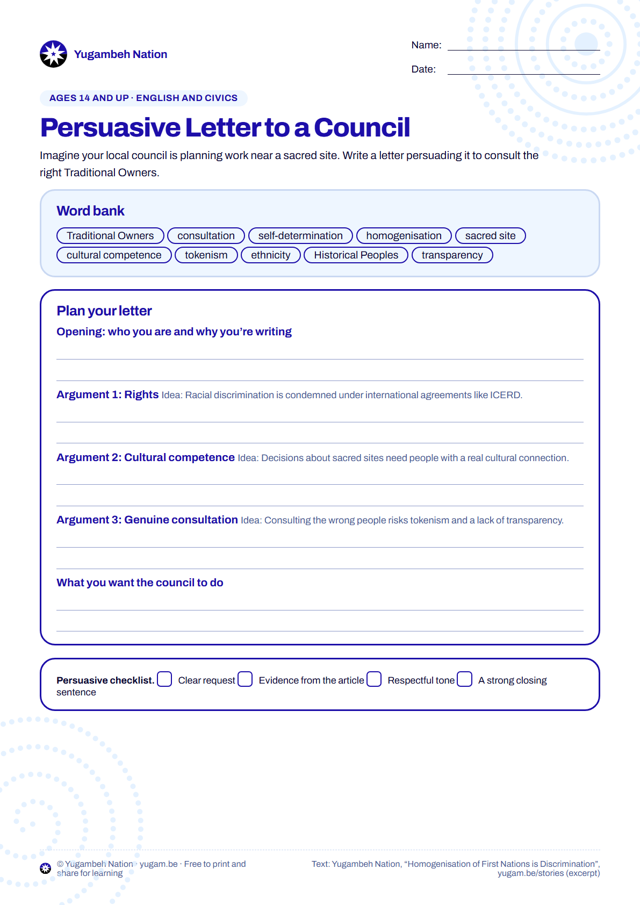
Write a Persuasive Letter to a Council
Use the arguments in “Homogenisation of First Nations is Discrimination” to write a persuasive letter asking a council to consult Traditional Owners properly.
View and download →