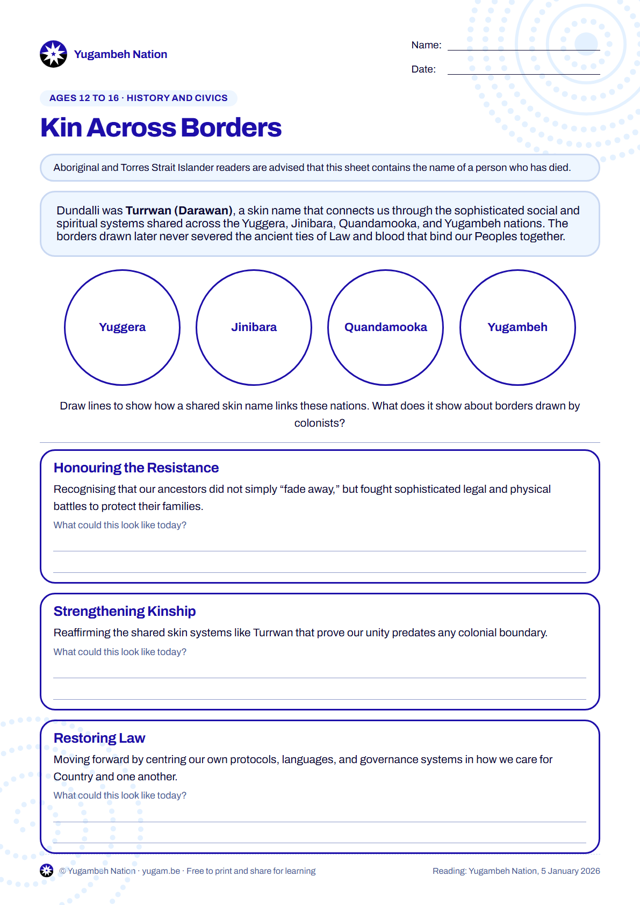
Aboriginal and Torres Strait Islander readers are advised that this worksheet contains the name of a person who has died.
Explore how a shared skin name, Turrwan, connects the Yuggera, Jinibara, Quandamooka and Yugambeh nations, and how kinship predates colonial borders.
Download nowPDF · 257 KBPrints on A4. Free to print and share for learning; please keep the Yugambeh Nation’s name on it.
What students do
- Explore how a shared skin name links four nations
- Explain three acts of reclamation
Australian Curriculum
- Year levels
- Years 7 to 10
- Learning areas
- HistoryCivics and Citizenship
- A_TSIP2Strong systems of family, kinship, law, governance and authorityPeople
- A_TSIP1Two distinct First Nations Peoples, each made up of many nationsPeople
Suggested links to version 9.0 of the Australian Curriculum cross-curriculum priorities: First Nations histories and cultures. Summaries are in our own words; see ACARA for the full organising ideas.
More worksheets
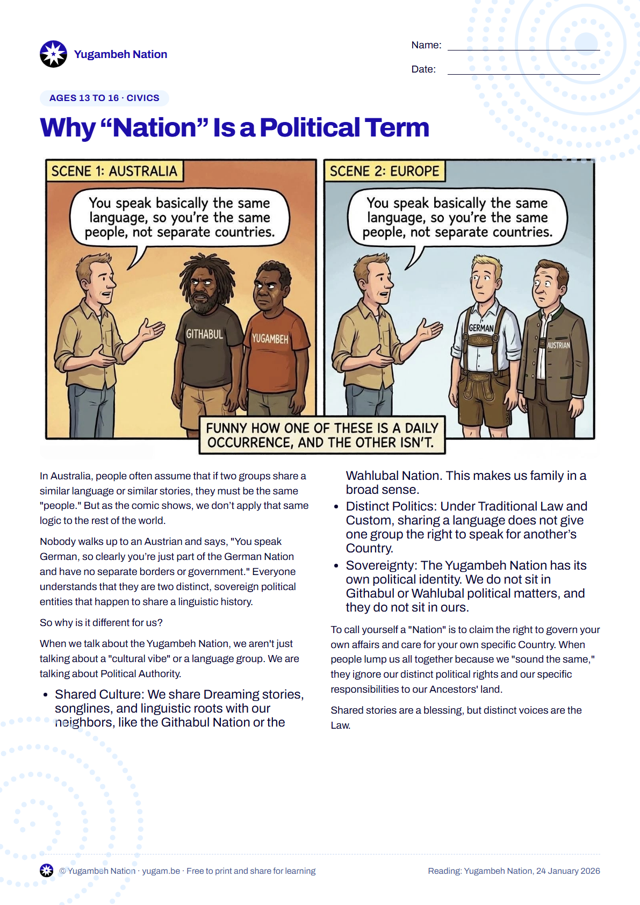
Why “Nation” Is a Political Term
Use a comic about Germany and Austria to explore why sharing a language doesn’t make two peoples one nation, and what sovereignty means for the Yugambeh Nation.
View and download →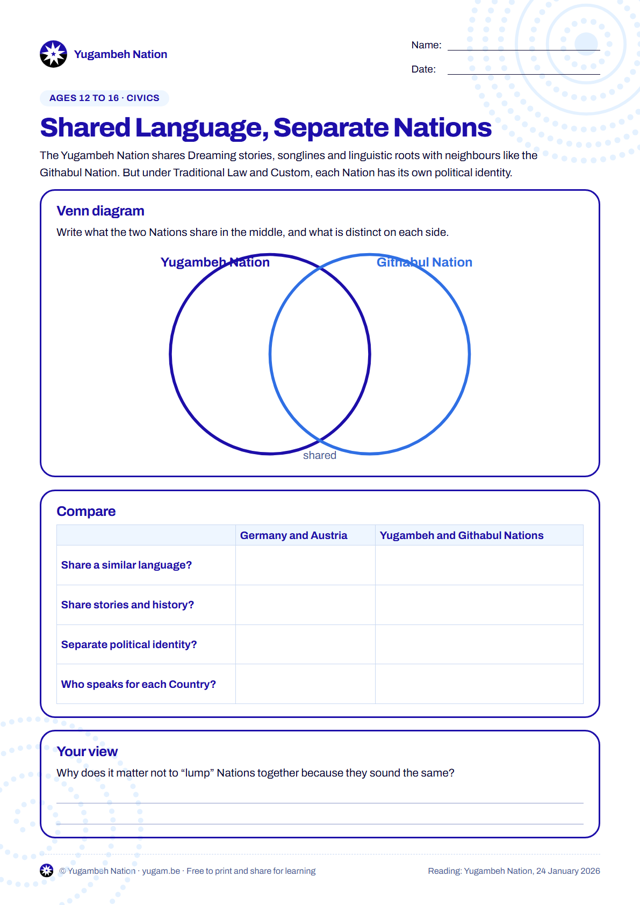
Shared Language, Separate Nations
Compare Germany and Austria with the Yugambeh and Githabul Nations using a Venn diagram, and explain the difference between shared culture and political authority.
View and download →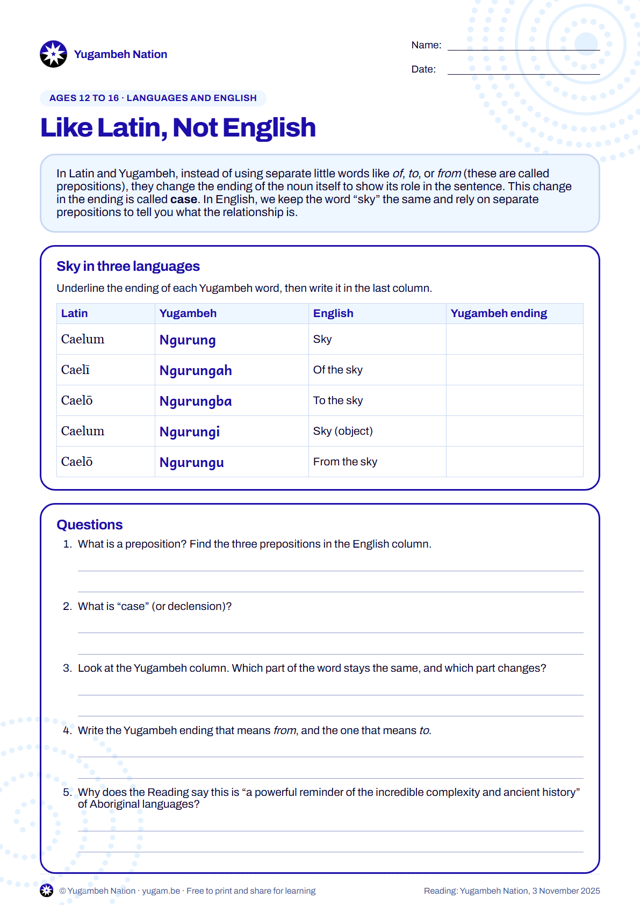
Like Latin, Not English: Case Endings
Discover how Yugambeh, like Latin, changes the ending of a word to show its role in a sentence, where English uses little words like of, to and from.
View and download →