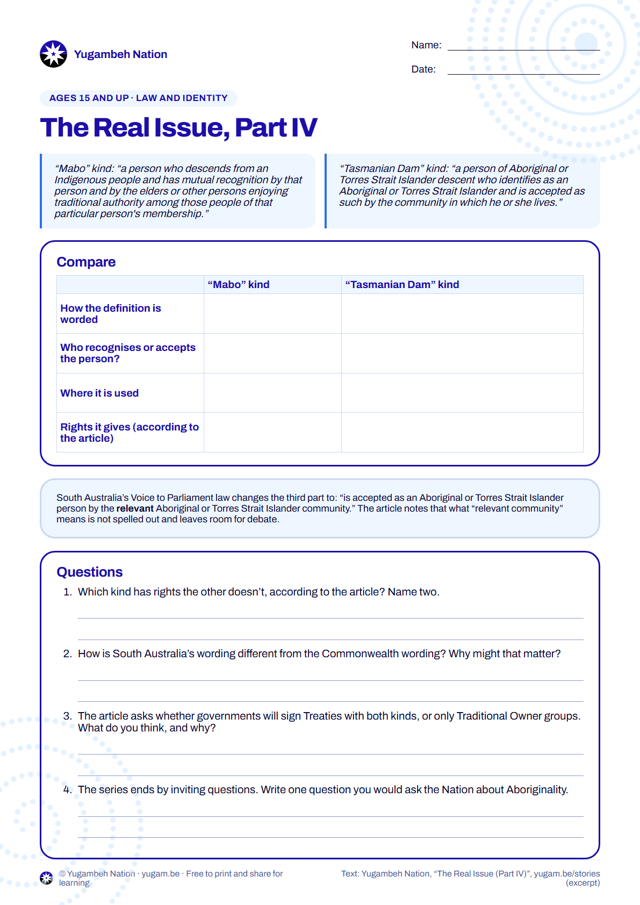
Compare the “Mabo kind” and the “Tasmanian Dam kind” of Aboriginality, look at how South Australia’s Voice defines a First Nations person, and form your own questions.
Download nowPDF · 264 KBPrints on A4. Free to print and share for learning; please keep the Yugambeh Nation’s name on it.
What students do
- Compare the “Mabo” and “Tasmanian Dam” kinds of Aboriginality
- Examine South Australia’s Voice definition
Australian Curriculum
- Year levels
- Year 10
- Learning areas
- Civics and Citizenship
- A_TSICP3Traditional owners, native title and pre-existing sovereigntyCountry/Place
- A_TSIP2Strong systems of family, kinship, law, governance and authorityPeople
Suggested links to version 9.0 of the Australian Curriculum cross-curriculum priorities: First Nations histories and cultures. Summaries are in our own words; see ACARA for the full organising ideas.
More worksheets
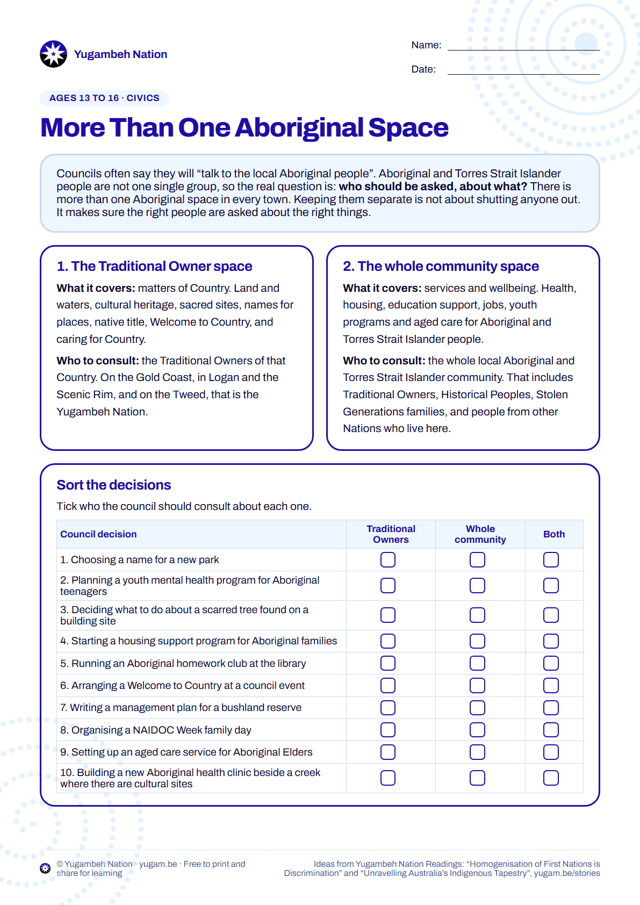
More Than One Aboriginal Space: Who Should a Council Consult?
Learn the difference between matters of Country for Traditional Owners and services for the whole local Aboriginal community, sort ten council decisions, and write to a council.
View and download →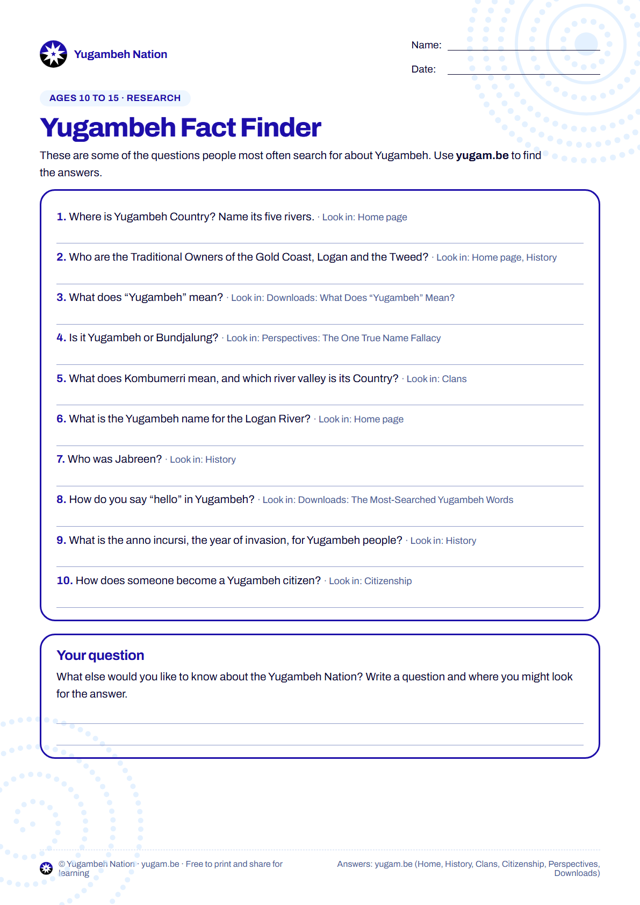
Yugambeh Fact Finder: The Most-Asked Questions
A research hunt through yugam.be answering the questions people most often search for about Yugambeh, from where Yugambeh Country is to who Jabreen was.
View and download →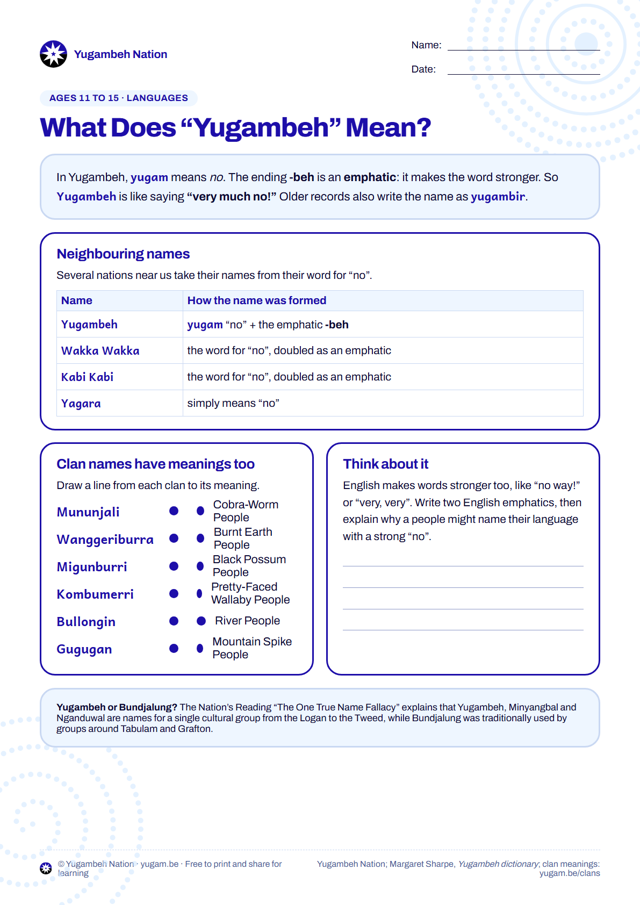
What Does “Yugambeh” Mean?
Discover that Yugambeh comes from yugam, “no”, with an emphatic ending, compare how neighbouring nations’ names were formed, and explore clan-name meanings.
View and download →