In early February 1860, in what is now Maryborough in the Wide Bay region, violence once again fell upon our Old People within the Butchulla Nation. Under the command of Native Police officer Lieutenant John O’Connell Bligh, troopers rode into an Aboriginal camp near a township store: a place where families had gathered, as they had for generations, along the Mary River.
What followed was not policing. It was a massacre.
What witnesses described
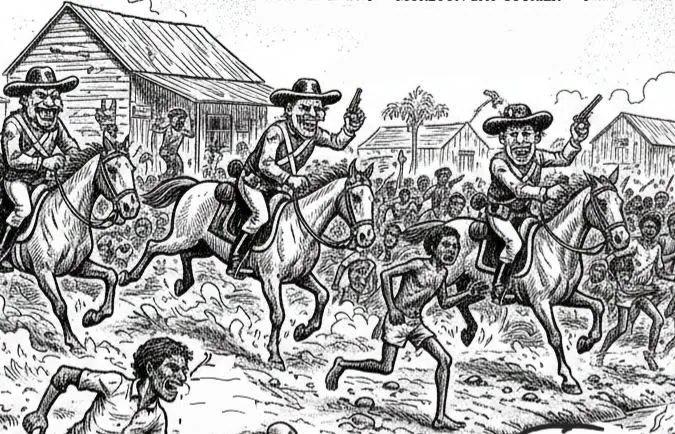
Witnesses described troopers charging the camp and chasing Aboriginal men, women and children through the streets of the young settlement and down toward the riverbanks. Shots rang out in the town and along the water. Some people were hit where they ran; others were driven into the Mary River and fired upon there.
Colonial accounts, fragmentary and often reluctant, recorded individual tragedies. An Aboriginal man referred to in the record as ‘Darkey’ was reportedly shot in the street and later burned. Another, known as ‘Young Snatchem’, was said to have been shot in the back by Bligh while in the river. The full number of lives taken was never formally counted: a silence that reflects how little value colonial systems placed on Aboriginal lives.
Condemned even then
Even at the time, not everyone accepted this violence quietly. A letter published in the Moreton Bay Courier condemned the incident as a ‘butchering’, alleging that the troopers, possibly intoxicated, behaved like ‘bloodthirsty brutes’. Such rare contemporary criticism reminds us that the brutality was visible even to those within settler society.
Why remembering matters
- Truth as a foundation. We cannot build an honest future while these histories remain half-spoken or softened. Frontier violence must be named plainly.
- Survival as resistance. Despite shootings, poisonings, displacement and policies aimed at erasure, our kinship systems, languages and cultural responsibilities endure.
- Sovereignty of story. When we tell these histories ourselves, our ancestors are no longer statistics or colonial footnotes. They are custodians whose Law and belonging were never surrendered.
As we reflect on those attacked along the Mary River in February 1860, we honour them through continuation: caring for Country, teaching language, strengthening family, and insisting on truth.
The frontier brought terrible loss. It did not bring erasure. We are still here. Our connection to this Country remains.
Always was, always will be.
Adapted from a Yugambeh Nation post of 8 February 2026.