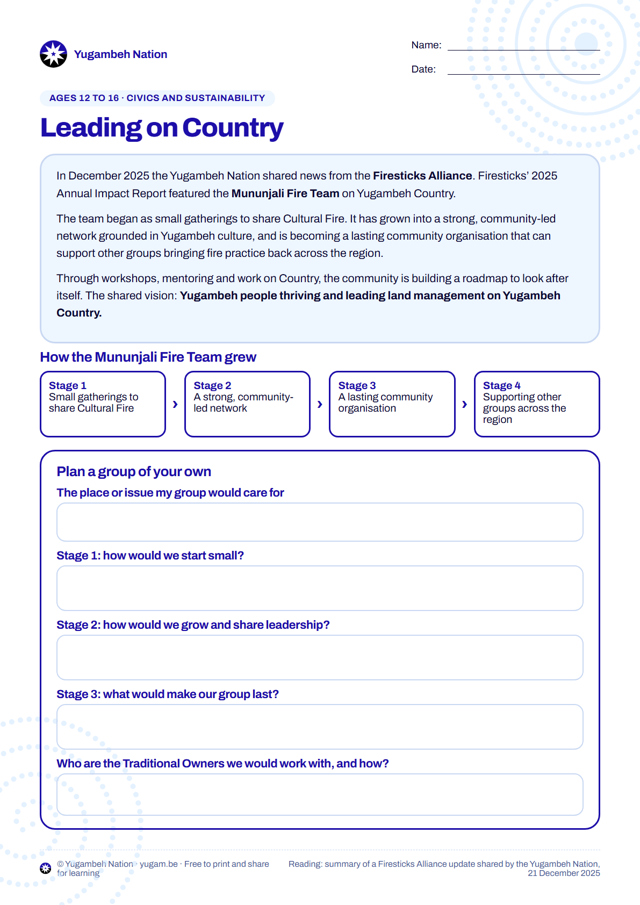
Follow how the Mununjali Fire Team grew from small gatherings to a community organisation, and plan how a group could grow to care for a place you know.
Download nowPDF · 272 KBPrints on A4. Free to print and share for learning; please keep the Yugambeh Nation’s name on it.
What students do
- Trace how a community fire team grew
- Plan a community group to care for a place
Australian Curriculum
- Year levels
- Years 7 to 10
- Learning areas
- Civics and CitizenshipGeography
- A_TSIP2Strong systems of family, kinship, law, governance and authorityPeople
- A_TSIP3Contributions acknowledged locally, nationally and globallyPeople
- SF2Finding information, reflecting on the past and acting for changeSustainability: Futures
Suggested links to version 9.0 of the Australian Curriculum cross-curriculum priorities: First Nations histories and cultures and Sustainability. Summaries are in our own words; see ACARA for the full organising ideas.
More worksheets
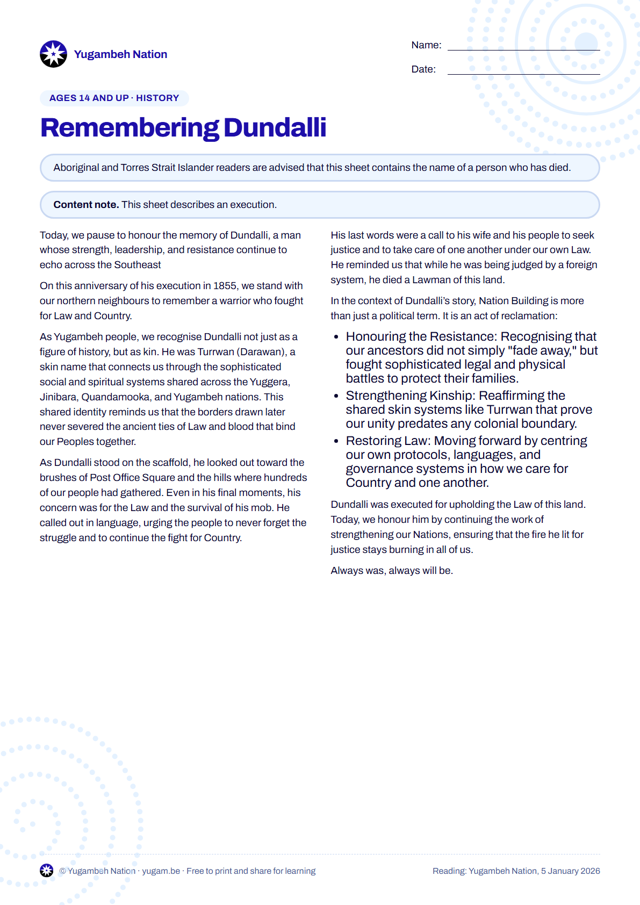
Remembering Dundalli
Read the Yugambeh Nation’s tribute to Dundalli, the Lawman executed in Brisbane in 1855, and what his story means for Nation Building.
View and download →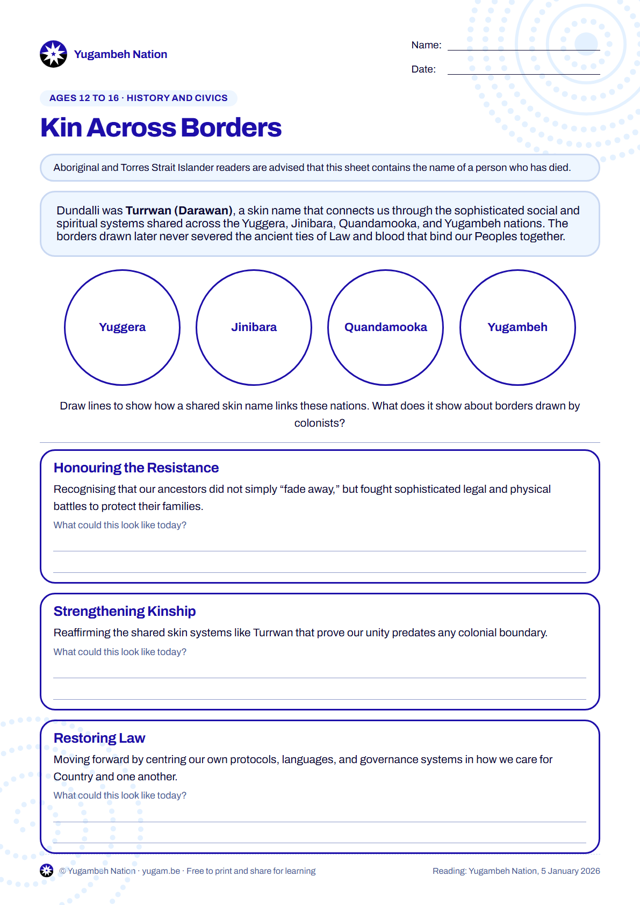
Kin Across Borders: Skin Names and Shared Law
Explore how a shared skin name, Turrwan, connects the Yuggera, Jinibara, Quandamooka and Yugambeh nations, and how kinship predates colonial borders.
View and download →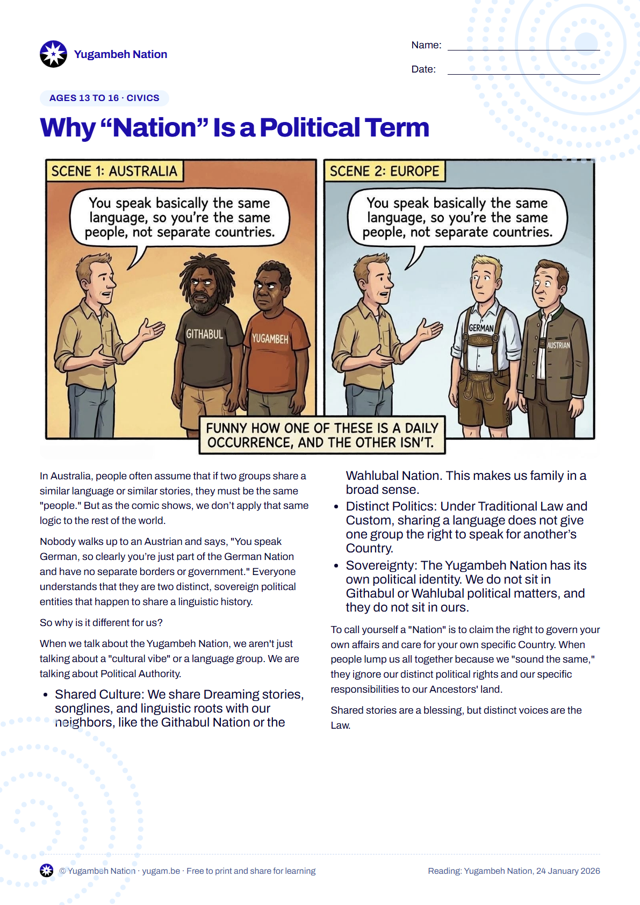
Why “Nation” Is a Political Term
Use a comic about Germany and Austria to explore why sharing a language doesn’t make two peoples one nation, and what sovereignty means for the Yugambeh Nation.
View and download →